2026 XPeng GX: Budget Land Rover Specs & UAE Guide
Published on: February 11, 2026
Author: Myo Satt
Estimated read time: 2 minutes
Don't have time to read the article? Listen to it in audio form instead.

Price: 250,000 AED
If you drive regularly between Dubai and Abu Dhabi, or out toward Sweihan and Al Ain, you already know the problem. Pure EVs lose range in 45°C heat, fast chargers thin out once you leave the big cities, and no one wants to pull over every couple of hours just to stare at a charging screen.
The 2026 XPeng GX is built to calm that anxiety. It is a full-size, six-seat SUV with clear Range Rover design cues, but it pairs that luxury feel with an extended-range electric setup that can cover over 1,000 km of mixed driving, plus 5C 800V charging that adds hundreds of kilometers in roughly a coffee break.
Chinese MIIT filings on 6 February 2026 confirm both EREV (a 1.5L generator feeding electric motors) and BEV versions on XPeng’s Kunpeng Super Electric System. Once you add UAE customs, 5% duty, 5% VAT, and a realistic dealer margin, the GX lands at around 250,000 AED, based on a China base price of roughly 400,000 to 500,000 CNY. That puts it up against entry German SUVs and makes it a “budget Range Rover,” considering a new Range Rover in the UAE usually starts north of 900,000 AED.
The big questions for local buyers are straightforward: how far will it actually go on battery in desert heat, what happens when the extender kicks in, and how useful is its near-L4 autonomy on straight, fast Gulf highways? On paper, the EREV’s 63.3 kWh pack delivers about 320 km CLTC electric-only before the engine generator wakes up, with total mixed range above 1,000 km. The reality in 45°C heat is a bit different, and worth unpacking.
What is the 2026 XPeng GX?
The 2026 XPeng GX (internal code G01) is XPeng’s new flagship SUV, built at the brand’s Guangzhou plant as a large, six-seat luxury model. The MIIT entry lists six variants in total, split evenly between BEV and EREV. That listing opened for public comment in early February 2026, which is usually the last step before production.
Under the skin, the GX sits on XPeng’s SEPA 3.0 Physical AI architecture. In practice, that means advanced chassis tech such as steer-by-wire and rear-wheel steering to help manage its 5,265 mm body length. The wheelbase is a long 3,115 mm, which is where the extra third-row comfort comes from.
XPeng’s CEO, He Xiaopeng, has framed the GX as the answer to what he calls the “three-row triangle”: comfort, cargo space, and driving dynamics. Most big SUVs only nail two of the three. Here, every row can recline, yet there is still usable boot space with all three rows up, and the chassis electronics try to keep this nearly 2.8-tonne SUV feeling smaller than it is.
Positioned Above the G9 as a True Flagship
Compared to the G9 (about 4,753 mm long), the GX plays in a different league. With that 3,115 mm wheelbase and taller body, it aims directly at the full-size segment that in China includes the Li Auto L9 and Zeekr 9X. It sits above the G9 on size, comfort, and perceived status.
Production should follow MIIT approval, and if XPeng repeats its G6 playbook, the GX could reach the UAE/GCC via grey imports in 2027, possibly followed by some form of official regional support afterward.
“Budget Range Rover” With an Autonomy Twist
Visually, the GX is clearly meant to make Range Rover owners look twice. The champagne paint, blacked-out pillars, “floating” roof effect, slim headlights, and full-width rear light bar all lean in that direction. The difference is the price and the brain.
Instead of loading the roof with LiDAR domes, XPeng chose a vision-based ADAS setup powered by four Turing chips with roughly 3,000 TOPS of compute. This hardware is specced for L4 capability, and XPeng already runs higher-level autonomous tests on public roads in China.
For the UAE, expect reality to start at L2+, with potential OTA upgrades to L3 or beyond, subject to RTA regulation. XPeng’s internal data suggests their system outperforms Tesla FSD in dense, complex traffic, though of course that is based on Chinese city testing rather than Sheikh Zayed Road.
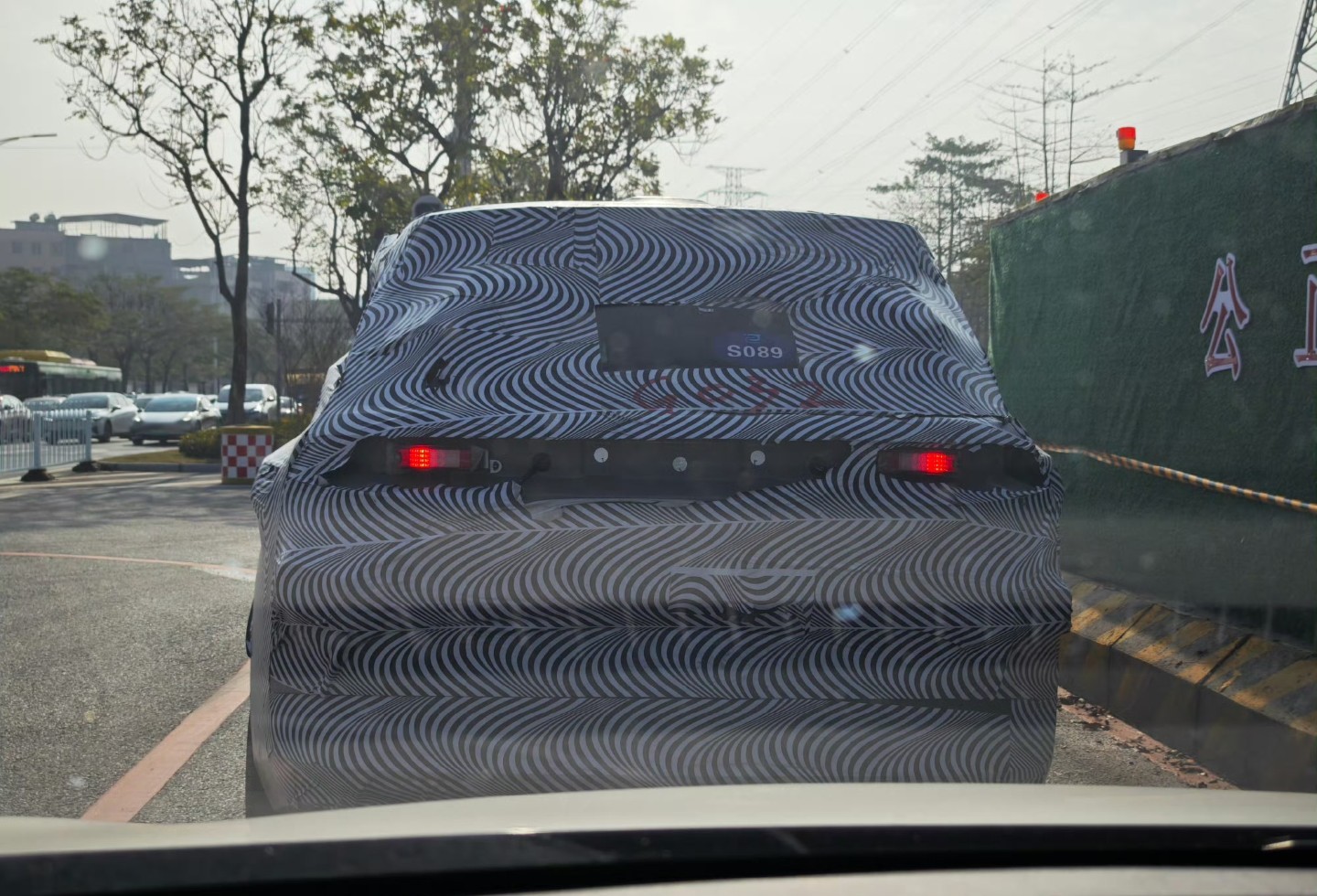
Design and Dimensions
MIIT-Confirmed Size: 5,265 x 1,999 x 1,800 mm
Official papers show the GX at 5,265 mm long, 1,999 mm wide, 1,800 mm tall, with a 3,115 mm wheelbase. Curb weight falls between roughly 2,690 and 2,890 kg, depending on variant.
That makes it comparable in footprint to a Nissan Patrol, and directly rivaling a BMW X7 at around 5,150 mm and a Mercedes-Benz GLS at about 5,207 mm. The GX rides on 21-inch or 22-inch wheels, which gives it the kind of stance that actually fills a Dubai mall parking bay.
Size-wise, it comfortably supports a six-seat layout without forcing adults to “fold” themselves into the third row.
Exterior: Why Everyone Compares It to a Range Rover
From the side, the GX has that upright nose, slightly tapering roof and strong shoulder line that people immediately associate with Range Rover. The details reinforce the impression: champagne paint, slanted A-pillars, a slim horizontal rear light bar, and flush, retractable door handles.
Interestingly, those flush handles are already being phased out by Chinese regulators after 2027 for safety reasons, but the GX keeps them for now to preserve the clean look. Even the split tailgate treatment nods to Land Rover’s design language.
The body is shaped for aero efficiency. That matters more in the UAE than brochures admit; less drag at 140 km/h in 45°C heat means less battery drain and lower generator use.
Chassis Tech: Steer-by-Wire and Rear-Wheel Steering
The SEPA 3.0 platform integrates steer-by-wire (steering commands are electronic, not mechanical) and rear-wheel steering that can turn the rear wheels by up to about 10 degrees. At low speeds, they turn opposite the fronts to reduce the turning circle, and at highway speeds they turn in phase for extra stability.
In plain terms, you get a big SUV that feels smaller when slotting into tight underground parking in Dubai Marina, and more settled when you sweep along E11 at 120–140 km/h.
Interior Features and Seating
Six-Seat 2+2+2 Layout
Instead of squeezing in a seventh seat, the GX chooses a 2+2+2 layout: captain’s chairs in all three rows. Each row reclines, and the 3,115 mm wheelbase gives the third row actual legroom, not punishment seating.
XPeng says the boot remains “extra-large” even with all six seats in use, which tracks with the exterior volume. The cabin materials are expected to match or slightly improve on the G9, so think soft leather, Alcantara accents, and tight panel gaps rather than experimental minimalism.
Key interior highlights:
- AR head-up display (HUD) projecting navigation about 20 m ahead
- Large central screen with AI-based cockpit controls
- Quad-zone climate control
- Ventilated and massaging seats in key positions
- Multiple ISOFIX points, including in the third row
- Generous wireless charging pads
Overall, it has the kind of family-first layout that makes school runs and airport trips easier than in a five-seat Tesla Model X, without the “MPV” feel of some Chinese rivals.
AR-HUD, AI Cockpit & Everyday Use
The AR-HUD replaces traditional dials, overlaying lane guidance, speed, and warnings onto the view of the road. Once you get used to the projected arrows “floating” out ahead, going back to a basic cluster feels oddly old-fashioned.
The AI cockpit watches voice commands and eye position and then quietly adjusts seat, climate, and even ambient lighting. In theory, after a month of ownership, it should know you like the driver’s seat cooled and the temperature dropped as soon as the outside hits 40°C.
Comfort in Desert Heat
Multi-zone air-conditioning with additional rear floor vents is designed to keep all three rows cool in 45°C plus weather. XPeng quotes cabin noise of under 60 dB at highway speed, which would be impressive for something this big. The LFP battery chemistry also copes better with sustained heat than some NMC/NCA packs, reducing thermal stress on long summer drives.
Powertrain: EREV vs BEV
Kunpeng Super Electric System
Under the marketing label, Kunpeng is XPeng’s 800V electrical platform that supports both pure EV and EREV layouts. In the EREV, the petrol engine never drives the wheels directly. It is a generator only, feeding power into the 63.3 kWh battery and then to the motors.
For UAE buyers, that means you still drive an electric SUV in feel and response. The engine simply steps in to recharge the battery when needed.
EREV: 1.5L 110 kW Generator + Dual Motors
The EREV uses a Harbin Dongan 1.5L turbo engine rated at about 110 kW. It works purely as a generator. The actual driving power comes from two electric motors:
- Front motor: 210 kW
- Rear motor: 160 kW
- Combined output: around 370 kW
The pack is a 63.3 kWh LFP battery from CALB, quoted at 320–452 km pure electric range on the CLTC cycle before the extender takes over. Total mixed range goes above 1,000 km in Chinese testing.
XPeng mentions an efficiency figure of about 3.2 kWh per litre of fuel, with a 60 L tank allowing the generator to recharge the battery fully roughly three times. LFP chemistry is rated for 3,000+ cycles, which suits hot climates like the UAE.
BEV: Pure Electric Variants
The BEV GX will come in rear-wheel drive and all-wheel drive:
- RWD: single rear motor, about 270 kW
- AWD: dual motors, up to 430 kW combined (front 160 kW + rear 270 kW)
Battery packs will mix LFP and ternary chemistries depending on trim, with higher-capacity packs likely in the ~80 kWh range. For drivers who mostly charge in Dubai, Abu Dhabi, or Sharjah and rarely leave the city grid, the BEV could be the cleaner, simpler choice.
Battery Capacity, Range and 5C Charging
63.3 kWh LFP Battery & 800V Setup
The EREV’s main drive battery is a 63.3 kWh CALB LFP pack, with usable capacity around 57 kWh. It is linked to the 800V architecture, which allows very high charging power and efficient power delivery to the motors.
Why LFP in the EREV? Three reasons:
- Better heat tolerance
- Longer cycle life (3,000+ cycles)
- Lower fire risk, particularly important in a market where cars sit outside in 40–50°C heat
BEV versions will likely get larger packs, with ternary chemistry used where higher energy density is needed.
1,000–1,400 km Mixed Range vs UAE Reality
On paper, the EREV’s mixed range exceeds 1,000 km CLTC, with pure EV ratings up to 452 km for certain trims. Chinese competitors like Li Auto L9 quote up to 1,400 km CLTC, which is where that upper figure comes from.
The UAE reality looks different:
- Constant highway speeds of 120–140 km/h
- High AC load in 45°C plus heat
- Occasional sand, crosswinds, and heavy traffic
Knock 20–30% off the CLTC figures and you land in the 700–900 km window for real mixed driving. That is still more than enough for a Dubai–Abu Dhabi–Al Ain triangle run with range to spare.
The generator typically cuts in when the battery drops to around 20%, so you can treat the electric range as a healthy “buffer” before any engine noise ever appears.
5C Charging: Up to 300+ kW
The GX’s 5C charging capability means it can take current equal to about five times its capacity. In practice:
- Peak DC charge power: 300+ kW on a capable 800V charger
- 10–80% charge in roughly 12–15 minutes, under ideal conditions
- About 300–400 km of added range in 10 minutes at peak power
The UAE already has 350 kW-rated chargers from DEWA and others, especially in Dubai. If you find one of those free, a quick stop is genuinely quick.
Autonomy, AI and Safety
Four Turing Chips, 3,000 TOPS, L4-Ready
The GX uses four Turing autonomous driving chips that together reach around 3,000 TOPS of compute. That is the sort of headroom needed for L4 functions, such as full self-driving without constant human monitoring, at least within limited geofenced areas.
XPeng tests its higher-level systems on highways and in dense city traffic in Guangzhou and other Chinese cities. For the UAE, the most immediate use case will be:
- Hands-free cruising on long, straight highways
- Automated lane changes
- Intelligent lane keeping in heavy traffic
The hardware is clear overkill for today’s legal frameworks, which is exactly the point. XPeng wants to upgrade capability via OTA as regulations catch up.
Vision-Based ADAS Instead of Roof LiDAR
The GX leans heavily on cameras and radar, with no large rotating LiDAR unit on the roof. XPeng’s City NGP (Navigation Guided Pilot) system in China takes this data and manages lane-level navigation in busy city environments.
The choice mirrors Tesla’s general approach, but XPeng tunes its stack to Chinese city patterns, which arguably resemble Sharjah or Deira traffic more than California suburbs.
2026 XPeng GX Price and Specs
China Pricing: 400,000–500,000 CNY
Reports from CarNewsChina and CnEVPost put the GX at 400,000 to 500,000 CNY, which converts to roughly 212,000–265,000 AED before tax and transport. That is above the G9, as expected, and in line with large, high-spec Chinese SUVs with lots of tech.
UAE Import: Duty, VAT & Dealer Margin
For a grey import into the UAE, you would layer on:
- 5% customs duty
- 5% VAT
- Around 10–20% dealer margin and logistics
Do the math, and you land around 250,000 AED for a decently equipped GX. If XPeng partners officially with current G6 dealers and launches a full network, top trims could push closer to 280,000 AED by 2027.
Either way, it comes in dramatically cheaper than a 900,000+ AED Range Rover, while offering tech the British SUV simply does not.
Also read: 2025 Range Rover Evoque Uae Review Pricing Features And Total Cost Of Ownership
Core Specs Snapshot
| Feature | EREV | BEV |
|---|---|---|
| Battery | 63.3 kWh LFP CALB | LFP / ternary CALB |
| Range | 1,000+ km mixed CLTC | 450+ km CLTC target |
| Charging | 5C 800V, up to 300+ kW | 5C 800V |
| Power | 370 kW combined | Up to 430 kW |
Release Date and Availability
Beijing Auto Show April 2026
The GX is set for a full public reveal at the Beijing Auto Show in late April 2026. The MIIT filing timeline lines up neatly with this.
China Launch: Orders in Q3–Q4 2026
Expect pre-orders in Q3 2026 and first customer deliveries in Q4 2026. XPeng’s broader plan includes ramping annual deliveries towards the 600,000-unit range across its lineup, though that figure is company ambition rather than a GX-specific target.
UAE / GCC Outlook
There is no confirmed official GCC launch yet. However, XPeng’s G6 already appears through Dubai-based importers, which sets a clear precedent.
If the same pattern holds:
- First GX units reach Dubai as grey imports in 2027
- Buyers handle RTA homologation checks, 5% duty, and registration
- Servicing handled by existing EV-specialist workshops and any XPeng-aligned service partners
For early adopters who are comfortable with Chinese-market software and English-language support that might feel slightly work-in-progress, that is a workable route.
XPeng GX vs Rivals
Against Range Rover, BMW X7, Mercedes GLS
Stacked against traditional luxury SUVs:
- Price: around 250,000 AED vs 900,000+ AED for a new Range Rover
- Powertrain: plug-in EREV or full BEV vs mostly ICE or mild hybrids
- Seats: standard 6-seat 2+2+2 vs 5–7 seats depending on configuration
The GX tries to bring the stature of a Range Rover, the cabin flexibility of a BMW X7, and the tech stack of a high-end EV into one package.
Also read: 2026 Range Rover Electric In Dubai True Cost Specs Release
Against Li Auto L9, Zeekr 9X
| Model | Price (AED est.) | Range | Autonomy | Seats |
|---|---|---|---|---|
| XPeng GX | 250,000 | 1,000 km EREV mixed | L4-ready hardware | 6 |
| Li Auto L9 | 300,000 | 1,400 km CLTC | L3 | 6 |
| Range Rover | 900,000+ | N/A | L2+ | 5–7 |
The L9 targets slightly more range and more conventional luxury, while the GX leans further into autonomy and EV-first driving feel.
Real-World UAE Ownership: Costs & Scenarios
Dubai–Abu Dhabi Trips
A Dubai–Abu Dhabi round trip is about 325 km, depending on your exact start and end points. In an EREV GX with its ~320–452 km CLTC electric rating, you can comfortably do that entire loop in EV mode, even after factoring in high AC load.
In summer, you might see an extra 10–15% drain from the heat and AC, but that still keeps most of the journey firmly inside battery-only range. If you then head to Al Ain or Ras Al Khaimah, the generator quietly joins the party.
Expect a total usable mixed range per full tank and charge in the 700–900 km zone under realistic UAE conditions.
Running Costs vs Petrol V8 SUVs
Approximate energy costs per 100 km:
- On-grid electric: around 0.50 AED in off-peak or EV-tariff conditions
- On extender (petrol): around 1.50 AED per 100 km, assuming efficient running
- Traditional large V8 SUV: roughly 5 AED per 100 km at typical UAE fuel prices, given their appetite
Over 100,000 km, that difference becomes very obvious in your bank statements.
XPeng usually backs its packs with about an 8-year / 160,000 km battery warranty, which is more than enough for most first owners.
Service, Warranty & Hot-Climate Battery Care
Service requirements on an EREV are lighter than a full ICE but heavier than a BEV. You still have an engine with oil and filters, but there is no conventional gearbox in the same sense.
Expect:
- Annual service costs somewhere around 2,000 AED, depending on labour rates
- Remote OTA diagnostics and software fixes
- Battery thermal management tuned to avoid overheating in 40–50°C parking
For owners in Abu Dhabi or Dubai who can plug in at home, most commuting and errands can be done on pure electric power, with the engine acting as a safety net rather than a daily workhorse.
Summary & Final Thoughts
The 2026 XPeng GX targets a specific niche: Gulf drivers who want the space and presence of a full-size Range Rover, the security of 1,000+ km total range, and the tech of a modern EV, without spending close to 1 million AED.
At a projected 250,000 AED landed price, with 5C 800V charging, L4-ready hardware, a 63.3 kWh LFP pack in the EREV, and a spacious 2+2+2 cabin, it is one of the more compelling Chinese imports to watch for 2027.
Summary Table
| Aspect | Details |
|---|---|
| Model Name & Trim | XPeng GX EREV / BEV |
| Price (Starting, UAE est.) | 250,000 AED (landed) |
| Powertrain | EREV: 1.5L 110 kW generator + 370 kW dual motors; BEV: up to 430 kW |
| Drivetrain | Single-speed, AWD / RWD |
| 0–60 mph | Around 4 s for high-power AWD |
| Range | >1,000 km mixed CLTC (EREV); 320–452 km EV-only CLTC |
| Seating | 6-seat 2+2+2 with captain’s chairs |
| Key Interior Tech | AR-HUD, AI cockpit, quad-zone AC, massaging seats |
| Exterior Highlights | Range Rover-style profile, 21–22 in wheels, flush handles |
| Safety / Autonomy | 3,000 TOPS compute, four Turing chips, vision ADAS, L4-ready |
| Cargo | Practical boot with all 3 rows up |
| Warranty | Around 8 years on battery anticipated |
| Launch | China Q4 2026; UAE imports from around 2027 |
People Also Ask
What is the 2026 XPeng GX release date?
The full reveal is scheduled for the Beijing Auto Show in April 2026, with Chinese sales to follow later that year.
How much is the 2026 XPeng GX?
Estimated UAE landed pricing is around 250,000 AED, based on a 400,000–500,000 CNY China base price plus 5% duty, 5% VAT, and import margins.
2026 XPeng GX range and charging?
The EREV version targets 1,000+ km of mixed CLTC range, with 320–452 km of pure electric range. On 5C 800V chargers, it can go from about 10–80% in roughly 12–15 minutes, adding roughly 300–400 km in a 10-minute stop under ideal conditions.
Is the XPeng GX full EV or EREV?
Both. The lineup includes BEV variants that run as pure EVs and EREV variants where a 1.5L engine acts strictly as a generator.
2026 XPeng GX battery capacity?
The EREV uses a 63.3 kWh LFP pack from CALB. BEV variants are expected to get larger packs, likely including ternary options for higher capacity.
Where can I schedule a test drive for a luxury SUV in UAE?
Alba Cars offers test drives for luxury vehicles. Visit Alba Cars.
Did you find this article helpful?
212 Brand New Cars
See AllRelated Articles

Top 10 Best Used Cars Dubai 2026
Explore the top 10 best used cars in Dubai 2026 with real AED price bands, GCC-s...
02/17/26
2026 AITO M6: UAE Price, Specs & Guide
Discover 2026 AITO M6 UAE price, specs, BEV vs EREV range, import costs and how ...
02/17/26
2026 XPeng G7 UAE: Price, 1704 km Range Guide
Explore 2026 XPeng G7 price in UAE, 1704 km EREV range, real-world battery perfo...
02/16/26


Visit ALBA CARS - No.1 Used Car Showroom Dubai
Alba Cars Dubai Showroom
Showroom 17, 18 & 20, Al Asayel Street, Al Quoz Ind 1
Dubai, United Arab Emirates
