BMW Neue Klasse i3: Electric 3-Series UAE Guide
Published on: January 15, 2026
Author: Myo Satt
Estimated read time: 4 minutes
Don't have time to read the article? Listen to it in audio form instead.
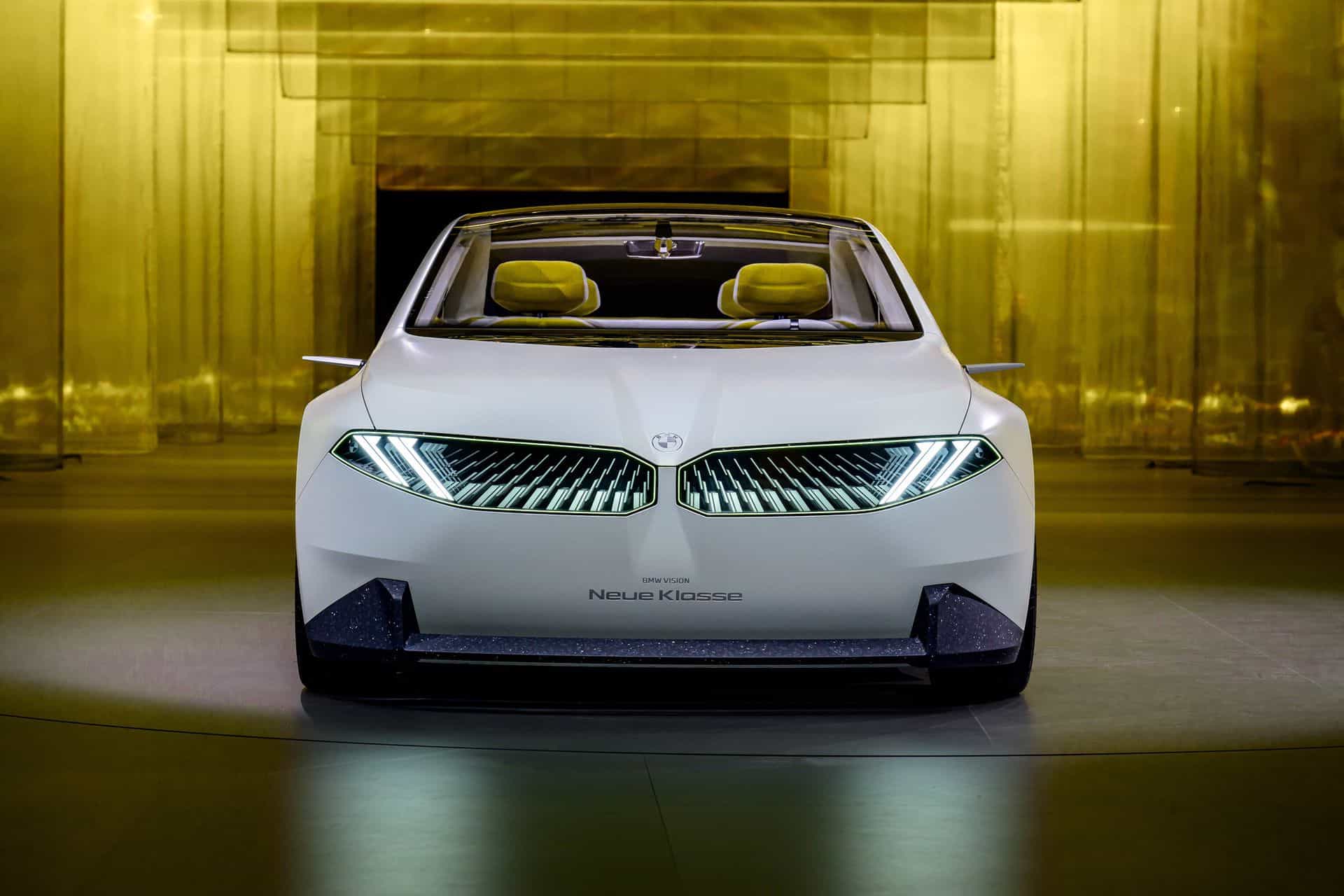
400+ Mile Range
The UAE is quietly turning into one of the most interesting test beds for electric cars. Charging stations are popping up across Dubai and Abu Dhabi, tariffs are attractive, and there are strong environmental incentives. The hard part for buyers is working out which premium EV sedan actually delivers proper long range in 45°C heat with the AC fighting for its life.
That is where the BMW Neue Klasse i3 comes in. It is the spiritual successor to the 3 Series, built from the ground up as an electric car and targeted to deliver an EPA-rated 400+ mile range. Crucially, that figure is expected to hold up even with 45°C desert temperatures and constant AC on runs between Dubai and Abu Dhabi.
BMW is engineering the car for 400 kW DC fast charging, which on the right ultra-fast charger should add roughly 230 miles in 10 minutes. Early pricing guidance points to around AED 183,000 to 220,000 as a base, plus 5% VAT. Over a five‑year period, the total cost of ownership is expected to undercut a petrol 3 Series by roughly 20–30% , helped by DEWA electricity tariffs around 0.32 AED/kWh.
UAE deliveries are tentatively targeted for 2027, after GCC homologation. What follows is a practical look at how this car will actually fit into UAE life, from Sheikh Zayed Road commutes to long weekend drives.
What is the BMW Neue Klasse i3 Electric Sedan?
The BMW Neue Klasse i3 is not a converted petrol car. It is a clean-sheet electric sedan on the NA0 Neue Klasse platform, separate from the upcoming G50 3 Series and the current i4. Production in Munich is scheduled to shift away from combustion 3 Series models and focus on this fully electric architecture.
BMW is chasing classic premium sporty sedan dynamics while bumping efficiency and tech. According to BMW CEO Oliver Zipse, the i3 signals the end of shared ICE and EV platforms for the 3 Series nameplate. The new batteries target around 20% higher energy density and roughly 25% overall efficiency gains compared with the current generation.
Positioning as the Electric BMW 3 Series
Think of the Neue Klasse i3 as the electric 3 Series: rear-biased, sharp handling, and refined, just without the fuel stops and engine noise. Unlike the multi-energy CLAR-based G20 i4, this car sits on a dedicated EV platform that gives it a flatter floor, more efficient packaging, and those claimed 25% efficiency gains.
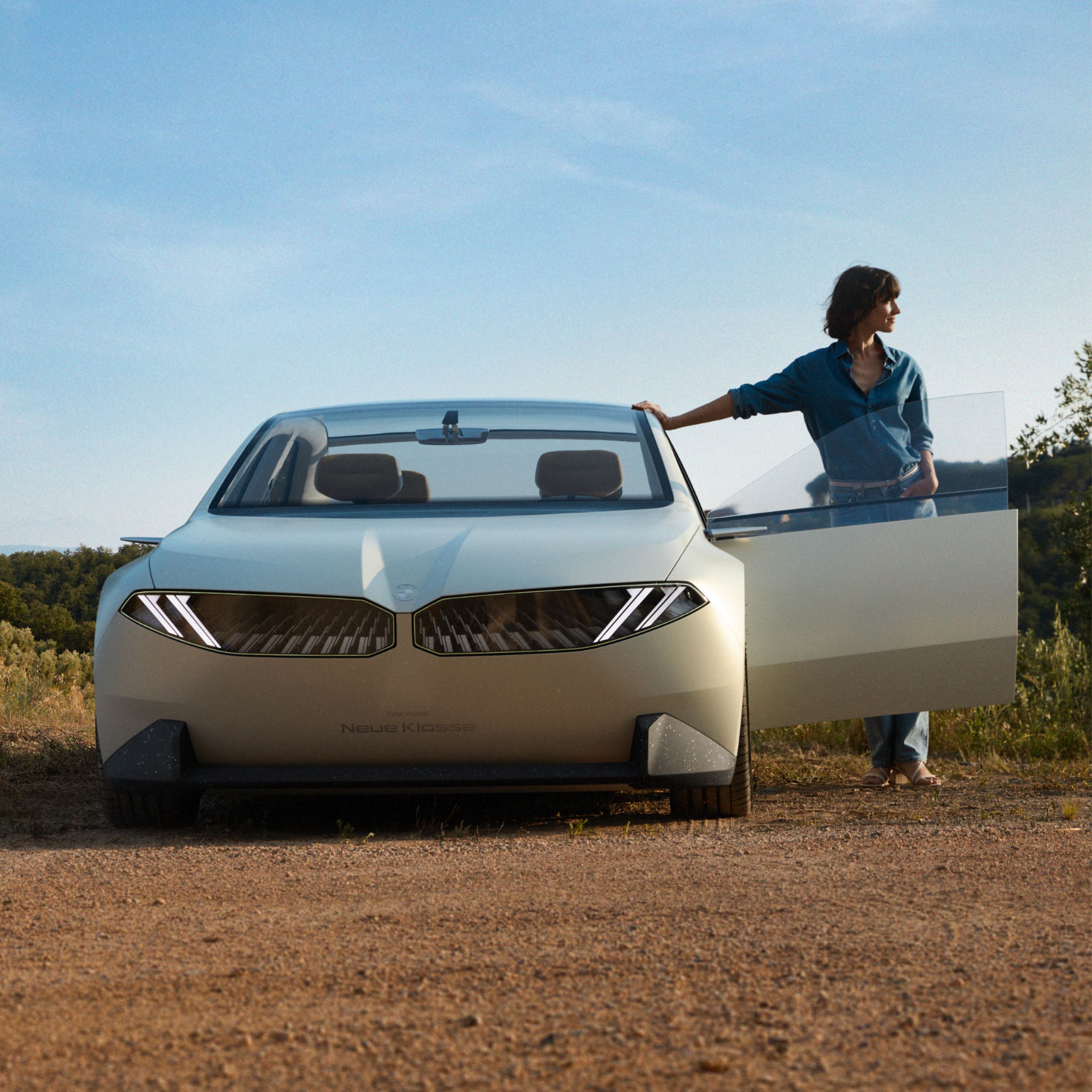
Spy shots show a pronounced shark nose, slim LED lights, aero wheels, and the familiar Hofmeister kink. Dimensions are expected to be close to the Vision Neue Klasse concept, with a length around 4,872 mm, very much in 3 Series territory. Without the long bonnet needed for an inline-six, the design can push the cabin further forward, freeing up rear-seat space and potentially allowing a small frunk.
Neue Klasse Platform vs Current 3 Series / i4
The Neue Klasse NA0 platform will carry sixth‑generation eDrive motors and a structurally integrated 108.7 kWh cylindrical battery. It uses an 800 V architecture with zonal electronics and a central "Heart of Joy" controller that ties together regenerative braking (up to 98% of everyday braking handled by regen), steering, and suspension.
By comparison, the current G20 3 Series with turbo petrol engines ranges around 255–382 hp, and the i4 makes up to 335 hp from an 81.2 kWh pack. The i3 aims for 20% higher energy density, roughly 30% faster charging, and a longer wheelbase to significantly improve rear legroom. Inside, you can expect a flat floor, a Panoramic Vision HUD replacing traditional gauges, and WLTP efficiency in the 15–16 kWh/100 km range.
Materials will be more sustainable, and multi-zone AC is being tuned with hot-climate markets in mind, which matters when you are loading the car with kids and luggage in August.
Global vs UAE Market Fit
Globally, the i3 is scheduled to arrive after the iX3 built in Debrecen, which is expected in 2026, and it is clearly aimed at Tesla Model 3 buyers who want a more traditional premium feel.
For the UAE, the focus shifts to thermal robustness. The battery and motors are designed to cope with 45°C ambient temperatures with minimal degradation, and high-speed stability and driver assistance are tuned for long stretches of Sheikh Zayed Road. GCC homologation should cover RTA requirements, and local cars are likely to come with strong AC performance, possibly ventilated seats, and features configured for desert use rather than European winters.
Also read: 2026 BMW X3 M50 Neue Klasse Uaes Ultimate Long Range Ev Suv Guide
Production and Launch Timeline
BMW is in the middle of one of its biggest production shifts in decades. The Munich plant, which has traditionally built the 3 Series, is planning to phase out combustion production and go EV-only by the end of 2027. Trial equipment runs are targeted to finish in December 2025, with pre-series builds starting in January 2026.
Munich Plant Transition from ICE 3 Series
The plant currently can build roughly 1,000 units per day. As part of the transition, i3 assembly is set to move from the FIZ pilot facility to the main Munich line in January 2026 for pre-series cars. Renovations affect roughly one third of the site, adding a new body shop and iFACTORY-style digital planning.
Full series production is expected in H2 2026, likely starting around July, with the existing G50 ICE 3 Series shifting to Dingolfing.
Global Debut: H2 2026 Production, 2027 Deliveries
The global unveil is anticipated in early 2026, with volume production from Munich in the second half of 2026. Customer deliveries in Europe and the US are likely to begin late 2026 to early 2027. A second production line in San Luis Potosí, Mexico, is slated to follow in 2027, and an i3 Touring NA1 wagon variant is expected later.
UAE Availability: Expected 2027 with GCC Homologation
For UAE buyers, expect a familiar delay pattern. Local availability via AGMC is likely late 2026 to early 2027, given the usual 6–12 month gap after the first European deliveries. GCC homologation will concentrate on extreme-heat validation, CCS2 charging compatibility, and RTA testing.
Pre-Order and Test Drive Roadmap
If you want an early slot, the practical move is to register interest at AGMC showrooms such as Dubai Festival City or Abu Dhabi. Pre‑orders should open after the global unveil in mid 2026, with first test drives in the UAE expected around Q1 2027, around the same time the new iX3 lands.
Expected Trims and Powertrains
The i3 lineup should broadly mirror the next iX3: efficiency-focused rear-wheel-drive variants and performance all-wheel-drive models, all using the 108.7 kWh pack and sixth‑gen eDrive hardware.
Entry RWD: i3 eDrive20 / eDrive40
- eDrive20: targeted around 250–300 hp, single rear motor, tuned for efficiency and city commuting.
- eDrive40: around 350 hp with an estimated EPA range of 400 miles, which is likely to be the sweet spot for most daily drivers.
AWD Performance: i3 xDrive40 / xDrive50
- xDrive40: dual motors with about 463 hp and 473 lb‑ft of torque, and an estimated 0–60 mph in 4.7 seconds.
- xDrive50: slightly uprated dual-motor setup with 469 hp, prioritizing maximum range as the flagship.
High-Output: i3 M60 xDrive
- M60 xDrive: expected to nudge above 600 hp, targeting a sub‑4.0 s 0–60 mph time and track-capable performance with M-specific aero and suspension.
800 V Sixth‑Gen eDrive Efficiency Gains
Across the range, BMW is promising about 20% higher battery energy density, roughly 30% faster charging, and about 25% better efficiency compared with its fifth‑generation eDrive systems. Silicon carbide power electronics help trim losses at high load, which is especially relevant for repeated fast charging on hot days.
Battery Technology and Range
The i3’s battery is built around 46 mm cylindrical cells, in 95 mm and 120 mm heights, assembled into a 108.7 kWh structural pack. Headline figures are bold:
- Up to 900 km CLTC
- Around 800 km WLTP
- Over 400 miles EPA
These are not marketing fantasies, but they do reflect different test cycles. CLTC is extremely optimistic and tailored to Chinese lab conditions. WLTP is more realistic for mixed driving. EPA tends to be conservative, especially at higher speeds.
BMW says internal tests between Debrecen and Munich have exceeded 1,000 km in ideal conditions, although that requires controlled speeds and mild temperatures.
Cylindrical Cells and 108 kWh Packs
Structural integration of the 108 kWh pack into the body helps stiffness and saves weight. The chemistry is expected to be NMC with advanced cooling channels running between cells. That matters in the UAE, where battery longevity is tied directly to how well the pack can stay within an acceptable temperature window during both driving and fast charging.
Headline vs Real‑World: CLTC 900 km, EPA 400+ miles, WLTP
Numbers break down roughly as follows:
- CLTC: about 900 km, but think of this as a best-case lab trophy figure.
- WLTP: around 800 km, closer to what you might see at moderate speeds in Europe.
- EPA: roughly 400 miles, which tends to translate well to real-world mixed driving.
In hot-climate, high-speed use, you need to mentally discount those figures.
UAE Scenarios: Dubai–Abu Dhabi at 140 km/h, 45°C, AC On
On a typical Dubai–Abu Dhabi run at around 140 km/h, full cabin load and AC set to keep everyone calm, you should budget a 20–30% range hit. The AC compressor and battery cooling draw more power at 45°C, and high speed alone bumps consumption.
BMW’s thermal management is designed to limit long-term battery degradation to under roughly 10% in the first year, even in 45°C summers, provided you use AC charging at home and do not fast-charge from 0–100% constantly.
A rough highway estimate table:
| Trim | EPA Est. | UAE Highway Est. (w/ AC & heat) |
|---|---|---|
| eDrive40 | 400 miles | 320–370 km |
| xDrive50 | 400 miles | 320–370 km |
| M60 | 380 miles | 300–350 km |
On a 140 km Dubai–Abu Dhabi leg, an xDrive50 would typically use around 300 km of indicated range, arriving with about 20% state of charge. That is enough buffer for traffic jams, detours, or one more errand.
Charging Performance in the UAE
On paper, the Neue Klasse i3 is ready for the best chargers the UAE has to offer. Peak DC charging is rated at 400 kW on 800 V hardware, with a claimed 10–80% time of around 20 minutes and roughly 230 miles of range added in one session. Average power should sit in the 250–300 kW region, assuming the charger and conditions are right.
Battery preconditioning helps the car hit and maintain those numbers, even when you have been driving in high heat beforehand.
400 kW Peak: 10–80% in About 20 Minutes, 230 Miles Added
In ideal conditions, BMW targets adding the equivalent of roughly 350 km WLTP or about 230 miles EPA in 10 minutes at a high-power charger. The UAE’s hot climate means the car will use both preconditioning and active cooling, so expect some variability, but the curve should still beat many current competitors.
UAE Infrastructure: DEWA / ADNOC 150–350 kW Sites
The UAE is already fairly well set up for this level of performance:
- DEWA operates 350 kW DC units at locations like Dubai Mall and Jebel Ali, using CCS2.
- ADNOC has 150–350 kW chargers along Abu Dhabi highways and towards Al Ain.
Roughly 80% of public fast-charge sites that matter for intercity travel now support 250 kW or more, which aligns well with the i3’s charging curve even if you cannot always hit the full 400 kW peak.
Home AC Charging and Thermal Management in Heat
At home, an 11 kW AC wallbox will take roughly 11 hours to fully charge the 108.7 kWh pack from empty, though in reality most owners will top up from 20–80%.
DEWA’s green tariff can be as low as about 0.28 AED/kWh, making overnight charging substantially cheaper than refuelling petrol at 4.4 AED/L. The cooling system is designed to keep the pack well within safe temperature limits even if the car is parked in 45°C heat and charged during the afternoon.
Versus Tesla Superchargers / Hyundai 800 V
On sustained DC charging, the i3 is targeting a stronger curve than a Tesla Model 3 on V4 Superchargers capped at 250 kW, and it should roughly match or slightly exceed an Hyundai Ioniq 6 on 800 V hardware. Where BMW claims an edge is in brake regeneration smoothness, which has a bigger impact in stop‑start traffic than on a straight highway.
Design, Interior and Tech
The Neue Klasse aesthetic is more minimalist than current BMW sedans but still recognisably BMW.
Exterior: Aero Wheels, Slim LEDs, Hofmeister Kink
Expect a largely closed kidney grille, flush door handles, smooth surfacing to reduce drag, and large 21‑inch aero wheels on higher trims. The Hofmeister kink remains at the C‑pillar, paired with slim LED headlights and tail-lights. Aerodynamics are not just for looks here; they directly support those 400+ mile range figures.
Panoramic Vision, iDrive X, Heart of Joy Controller
The cabin is dominated by:
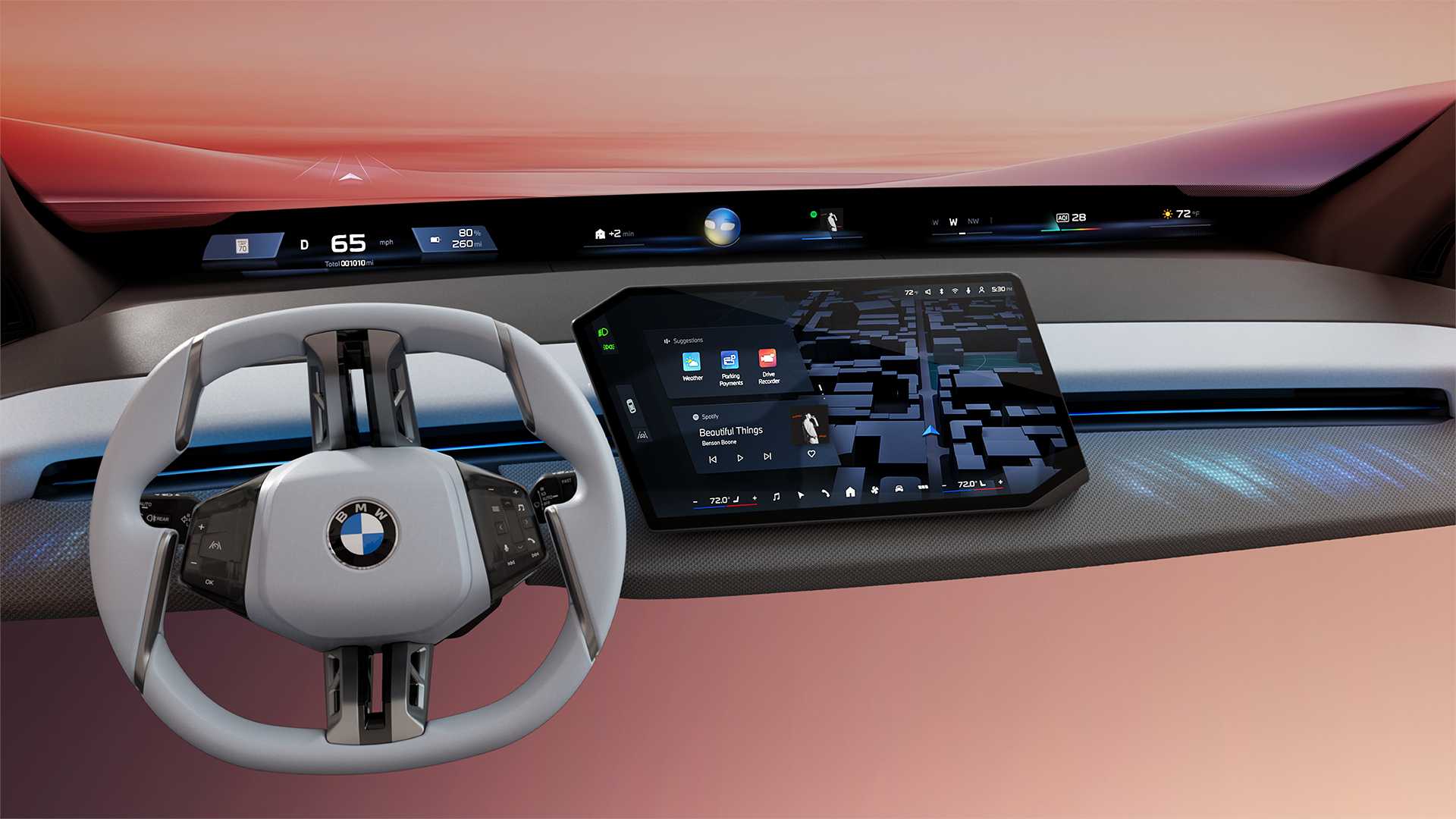
- A full-width Panoramic Vision HUD projected along the base of the windscreen.
- A 17.9‑inch iDrive X central touchscreen.
- The "Heart of Joy" controller that blends chassis, powertrain, and driver assistance functions, and supports frequent over‑the‑air updates.
The effect should feel closer to a concept car interior than a facelifted G20.
UAE Comfort: Cabin Cooling and Space vs G20 3 Series
With a wheelbase stretched by roughly 100 mm compared with the G20 3 Series, rear legroom is noticeably improved. The flat floor helps three-abreast seating, and multi-zone climate control with stronger evaporators and compressors should make the back seats livable even after the car has been left in the sun.
Materials will lean toward lighter colours and UV-resistant fabrics and leathers, which stay cooler and resist cracking in UAE conditions.
Pricing and Ownership Costs in the UAE
On global guidance, the Neue Klasse i3 should land in the 50,000–60,000 USD bracket, which roughly translates to AED 183,500–220,000 before tax. UAE pricing includes 5% VAT and minor duties, so real-world sticker prices will climb from there.
BMW typically includes an 8‑year / 160,000 km battery warranty with at least 70% capacity retention, and the i3 is expected to follow that pattern.
Global Estimate: 50,000–60,000 USD → 183,000–220,000 AED Base
Expect something along these lines:
- eDrive40: around AED 200,000 base.
- M60: closer to AED 280,000 with generous equipment.
Trim Pricing Ladder in AED (with VAT, Estimated)
A likely UAE pricing structure, including 5% VAT, could look like this:
- eDrive40: about AED 210,000
- xDrive50: around AED 240,000
- M60: near AED 290,000
Final numbers will depend on exchange rates and local specification.
TCO vs Petrol 3 Series / Tesla Model 3: Electricity Savings
The key win over a petrol 330i is running cost. With DEWA tariffs around 0.32 AED/kWh and petrol at roughly 4.4 AED/L, an EV in this class can easily save around AED 30,000 in energy costs over 5 years.
BMW’s own UAE EV sales data shows the i4 already competing strongly with rivals, helped by lower servicing costs and fewer moving parts to maintain.
A simplified ownership comparison over 5 years / 50,000 km:
| Aspect | i3 (5 yr / 50k km) | Petrol 330i | Tesla Model 3 |
|---|---|---|---|
| Energy | 15,000 AED | 45,000 AED | 14,000 AED |
| Total | 250,000 AED | 320,000 AED | 240,000 AED |
The total column includes approximate depreciation, servicing, insurance, and energy.
Also read: How Much Is My Car Worth In Dubai 7 Key Factors That Move Used Car Prices
Comparisons: i3 vs Tesla Model 3, Ioniq 6, EQE
The Neue Klasse i3 does not aim to be the cheapest option. Instead, it tries to sit above the Tesla Model 3 and Hyundai Ioniq 6 in materials and driving feel, but below a Mercedes EQE in size and price.
Where Tesla wins is software depth and a vast Supercharger network. Where Hyundai scores is value and efficiency. BMW’s pitch is that its chassis balance, rear-drive bias, and near 98% regen coverage offer a more natural driving experience, particularly at UAE highway speeds.
Range, Charging, Performance Table
| Feature | BMW i3 xDrive50 | Tesla Model 3 LR | Hyundai Ioniq 6 | Mercedes EQE |
|---|---|---|---|---|
| Range EPA | 400 miles | 363 miles | 361 miles | 340 miles |
| Charge Peak | 400 kW | 250 kW | 350 kW | 200 kW |
| 0–60 mph | 4.7 s | 4.2 s | 3.9 s | 4.2 s |
| Power HP | 463 hp | 394 hp | 320 hp | 402 hp |
| Price AED est. | 240,000 AED | 190,000 AED | 180,000 AED | 280,000 AED |
Driving Dynamics and the UAE Advantage
For buyers who spend most of their time on Sheikh Zayed Road or the E11, the subtle stuff matters: how stable the car feels at 140 km/h, how predictable the brake pedal is when regen blends into friction, how the chassis copes with expansion joints and crosswinds.
BMW has built its reputation on that sort of detail. The Neue Klasse i3 is intended to carry that forward while still giving you 400+ mile range and 400 kW charging. Against a Model 3, it will likely feel more substantial and more refined; against an EQE, it should feel lighter and more agile.
Conclusion
The Neue Klasse i3 is shaping up to be the first truly long-range electric 3 Series for the UAE: 400+ mile EPA range, 400 kW DC charging, and a dedicated EV platform that takes advantage of every centimeter of space.
For typical Dubai–Abu Dhabi trips, it offers plenty of range headroom, quick top-ups at DEWA and ADNOC sites, and long-term running costs that undercut an equivalent petrol sedan by 20–30% over five years. If you plan to buy a premium EV around 2027, it is a model worth watching as AGMC firms up specs, pricing, and total cost-of-ownership tools.
Summary Table
| Feature | Details |
|---|---|
| Model Name & Trim | BMW Neue Klasse i3 eDrive40 / xDrive50 / M60 xDrive |
| Price (Starting MSRP AED) | 210,000 / 240,000 / 290,000 AED (estimated, plus 5% VAT) |
| Powertrain | 108.7 kWh battery, sixth‑gen eDrive RWD / AWD, 350–463 hp, 400–473 lb‑ft |
| Transmission & Drivetrain | Single or dual motor, RWD / AWD |
| 0–60 mph time | 5.5 s / 4.7 s / 4.7 s |
| Fuel Economy or EV Range | 400 miles EPA / 800 km WLTP |
| Interior Features | Panoramic Vision HUD, iDrive X 17.9" screen, Heart of Joy controller, sustainable materials |
| Exterior Highlights | Aero wheels, slim LEDs, Hofmeister kink, illuminated grille |
| Safety Features | Level 2+ ADAS, 98% regen braking, Heart of Joy stability |
| Cargo Space | Improved vs G20 3 Series thanks to flat floor |
| Warranty & Maintenance info | 8‑year / 160,000 km battery warranty (estimated) |
| Release Date / Availability | Production H2 2026, UAE availability targeted for 2027 |
People Also Ask
What is the BMW Neue Klasse i3 release date in UAE?
It is expected late 2026 to early 2027 via AGMC, after GCC homologation. Series production is scheduled to begin around July 2026 in Munich.
How much will the BMW Neue Klasse i3 cost in AED?
Base pricing is estimated at AED 183,000–220,000 before VAT. The eDrive40 should start around AED 210,000, and the xDrive50 around AED 240,000 including 5% VAT, subject to final specifications.
What is the real-world range of BMW i3 in UAE heat?
On UAE highways at around 140 km/h, 45°C, and the AC fully on, expect roughly 320–370 km of usable range for the top trims. A Dubai–Abu Dhabi round trip is manageable with a single fast charge as backup.
How fast does the BMW i3 charge on DEWA stations?
On a 400 kW-capable charger, the i3 targets 10–80% in about 20 minutes. At DEWA 350 kW sites, you can add roughly 230 miles of range, with an average charging rate around 250 kW in UAE conditions.
BMW i3 vs Tesla Model 3: Which for UAE highways?
The i3 offers a longer projected range (400 miles vs 363 miles EPA for the Model 3 Long Range), a more premium cabin, and traditional BMW handling. The Tesla Model 3 is typically cheaper and has quicker software updates. For drivers who value driving feel and refinement over app features, the i3 is likely the better fit.
Where can I schedule a test drive for a luxury EV sedan in UAE?
Alba Cars offers test drives and services for luxury vehicles including EVs in the UAE.
Did you find this article helpful?
212 Brand New Cars
See AllRelated Articles

Guide to Driving Licenses for Expats in UAE: Navigating the ...
A detailed guide for expats on acquiring a driving license in UAE, including typ...
04/19/25
The All-New 2026 Renault Grand Koleos: A Comprehensive Overv...
Explore the 2026 Renault Grand Koleos with an in-depth overview of its design, f...
06/16/25
2026 Toyota RAV4 Hybrid vs. Honda CR-V Hybrid: A Comprehensi...
Explore the detailed comparison between the 2026 Toyota RAV4 Hybrid and Honda CR...
05/24/25


Visit ALBA CARS - No.1 Used Car Showroom Dubai
Alba Cars Dubai Showroom
Showroom 17, 18 & 20, Al Asayel Street, Al Quoz Ind 1
Dubai, United Arab Emirates
